TEA JOURNAL
Black Tea · Warm & Mellow
Black tea is a fully fermented tea, and its soul lies in the enzymatic oxidation of tea polyphenols. Freshly plucked leaves first undergo several hours of withering, allowing the leaves to soften and lose moisture. They are then rolled to break down cell structures and release the juices. Next comes fermentation — the most critical turning point. Under the right temperature and humidity, tea polyphenols oxidize and polymerize, producing theaflavins and thearubigins. The leaves turn from green to coppery red, and the grassy scent gradually transforms into notes of fruit, flowers, and honey. Finally, high-temperature drying locks in the flavor, completing the transformation from fresh leaf to black tea.
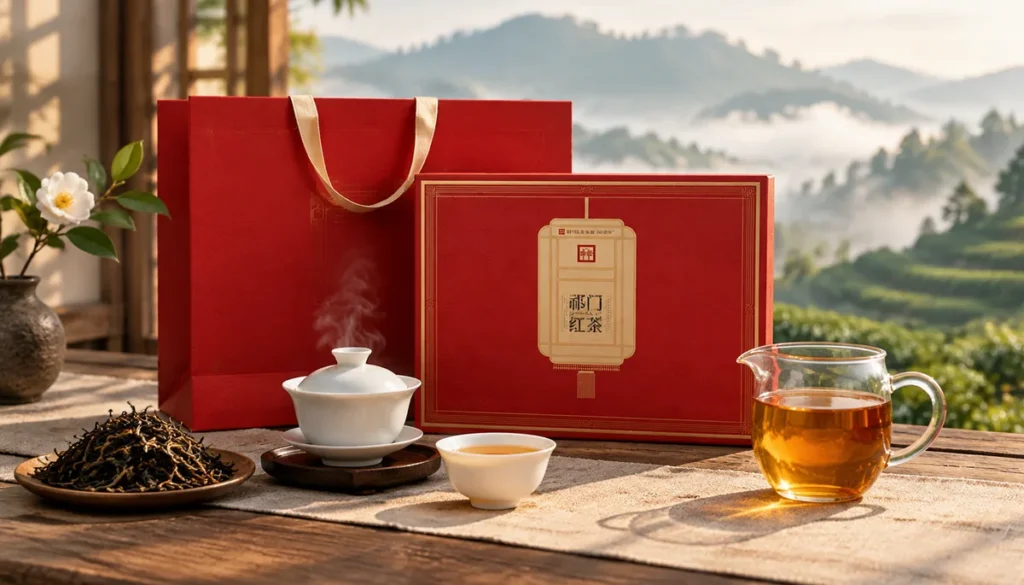
Chinese black teas are diverse, each with its own character. Keemun is famous for its “Keemun aroma” — floral, fruity, and honeyed, praised as “the finest of all fragrances.” Lapsang Souchong originates from Tongmu Pass in Fujian, traditionally smoked over pine wood, carrying a distinctive pine smoke aroma and longan-dried-fruit sweetness. Dianhong from Yunnan features plump buds covered in golden hairs, with a bold, brisk liquor that carries warm notes of caramel and malt. There are also Chuanhong from Sichuan, Yihong from Hubei, Yinghong No. 9 from Guangdong… Each black tea is a taste signature of its terroir.
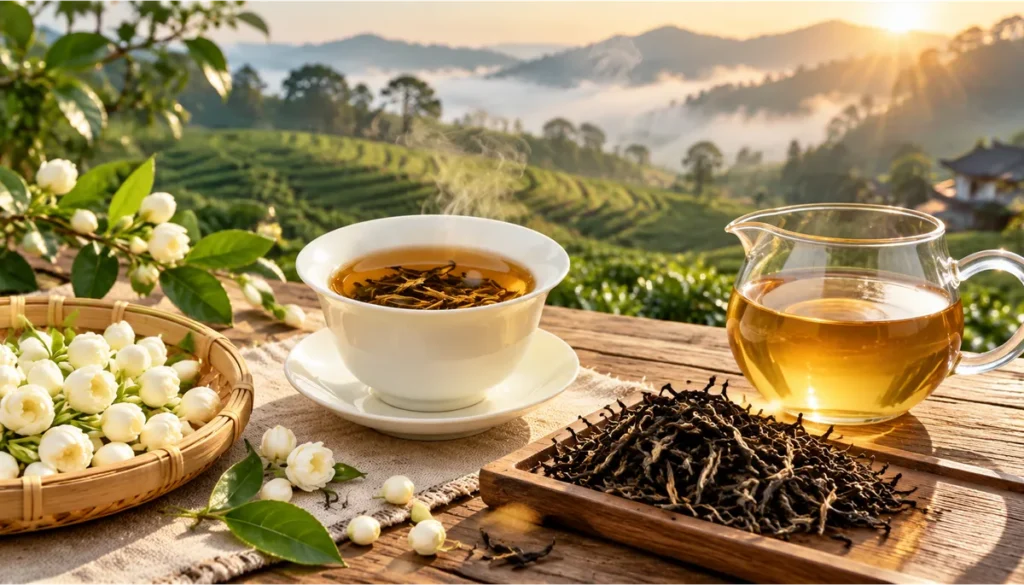
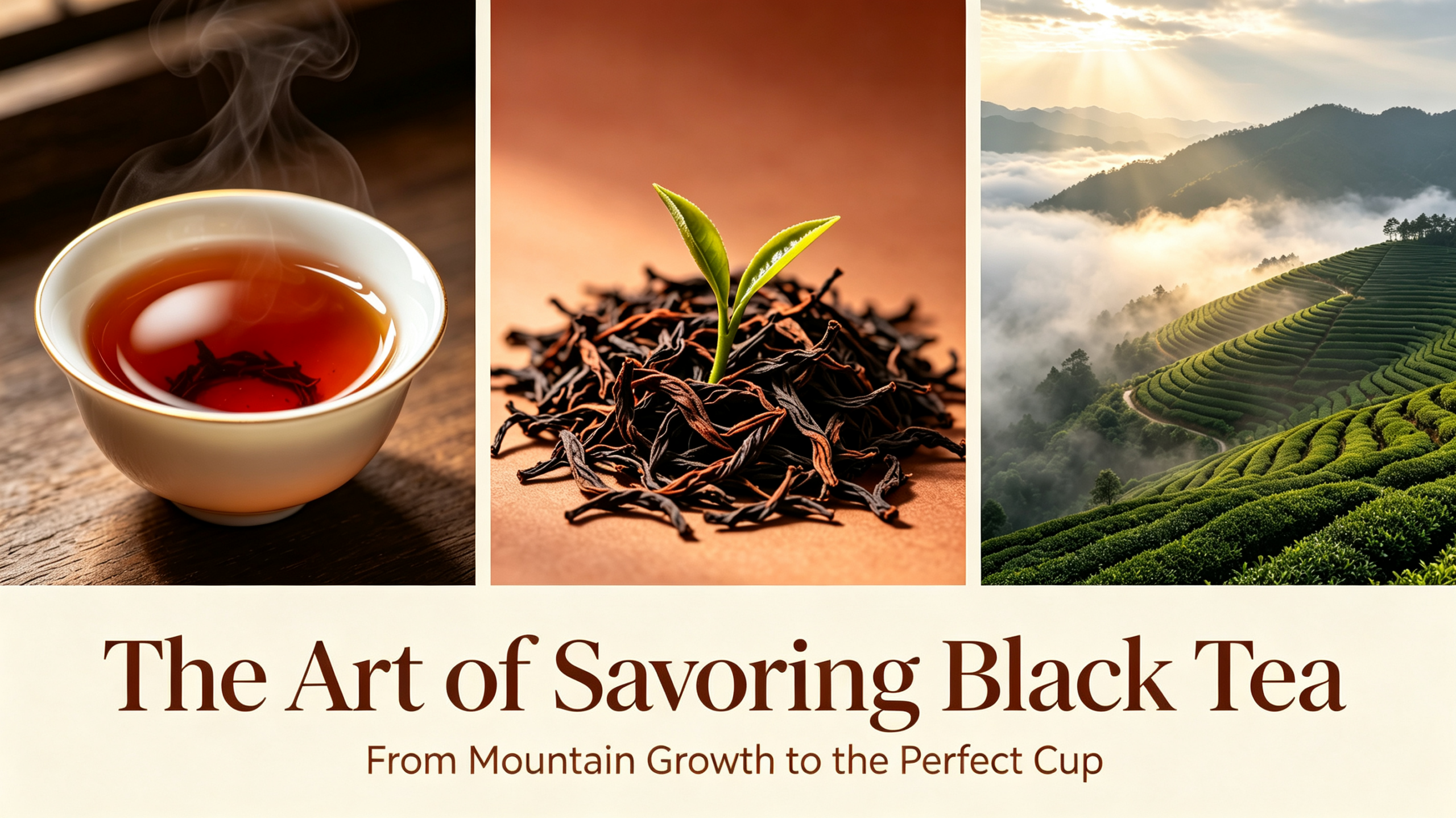
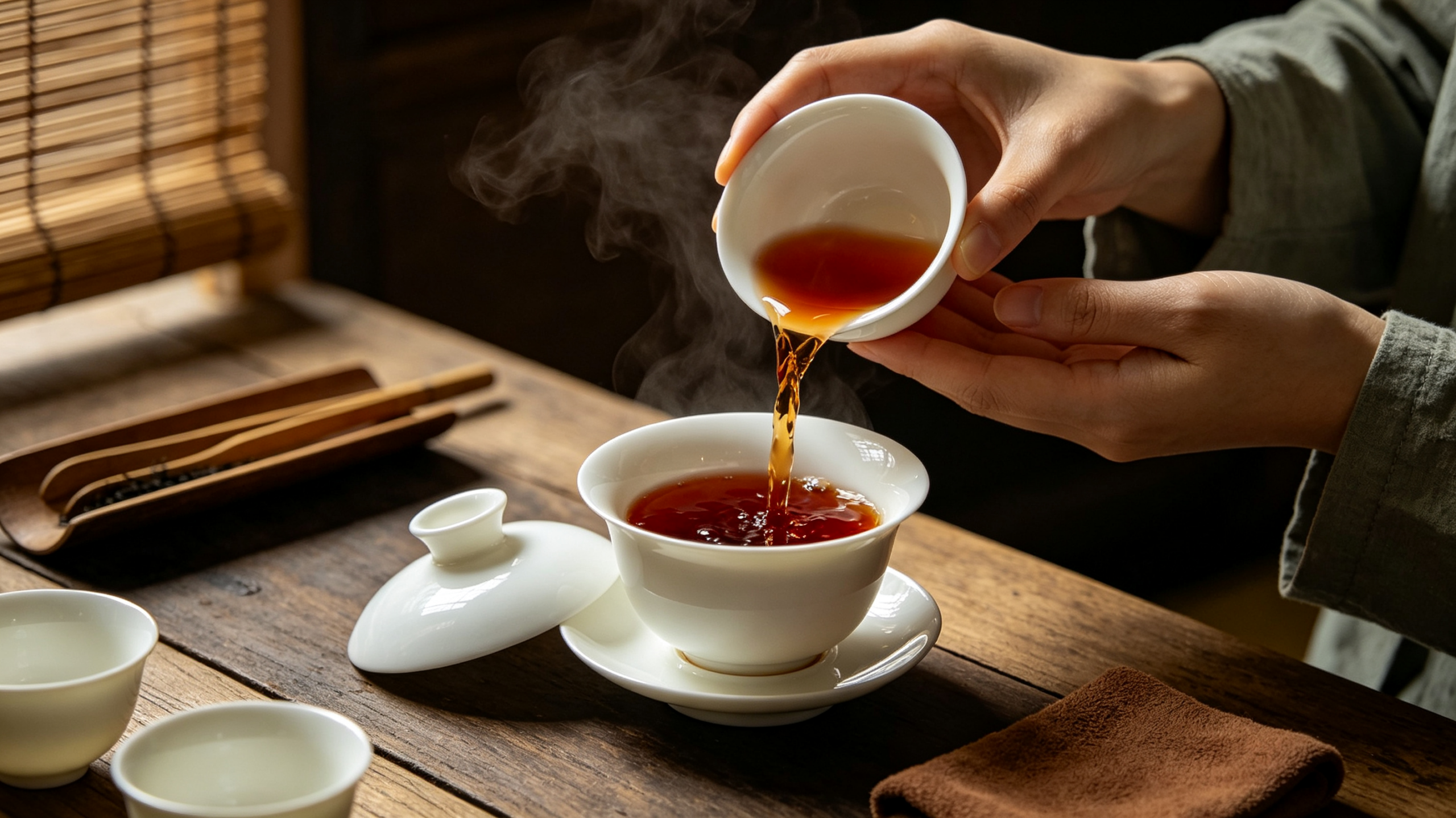
A fine cup of black tea has a bright, red liquor with a golden ring around the edge of the cup — a sign of abundant theaflavins. The aroma is high and lasting, the taste sweet, smooth, and mellow, with a lingering finish. It can be enjoyed plain to savor the terroir, or blended with milk, honey, lemon, or cinnamon for new possibilities. In autumn and winter, a warm cup of black tea in your hands sends warmth from your palms all the way to your heart.
Tasting · A Journey of Five Senses
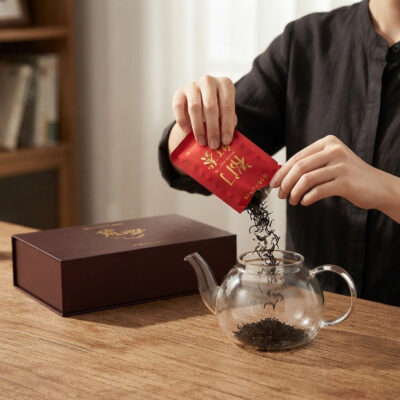
Tasting tea is never just about “drinking.” True appreciation engages sight, smell, taste, touch, and mind fully. The first step is observing the dry leaves: check whether the strips are tightly rolled, whether the color is dark and lustrous, whether golden hairs are visible — these appearance traits often reveal the tenderness of the raw material and the level of craftsmanship. Next is warming the cup and smelling the aroma: place the dry leaves into a warmed gaiwan, shake gently, lift the lid and sniff. The aroma releases with the warmth — sweet, floral, fruity, or pine-smoked.
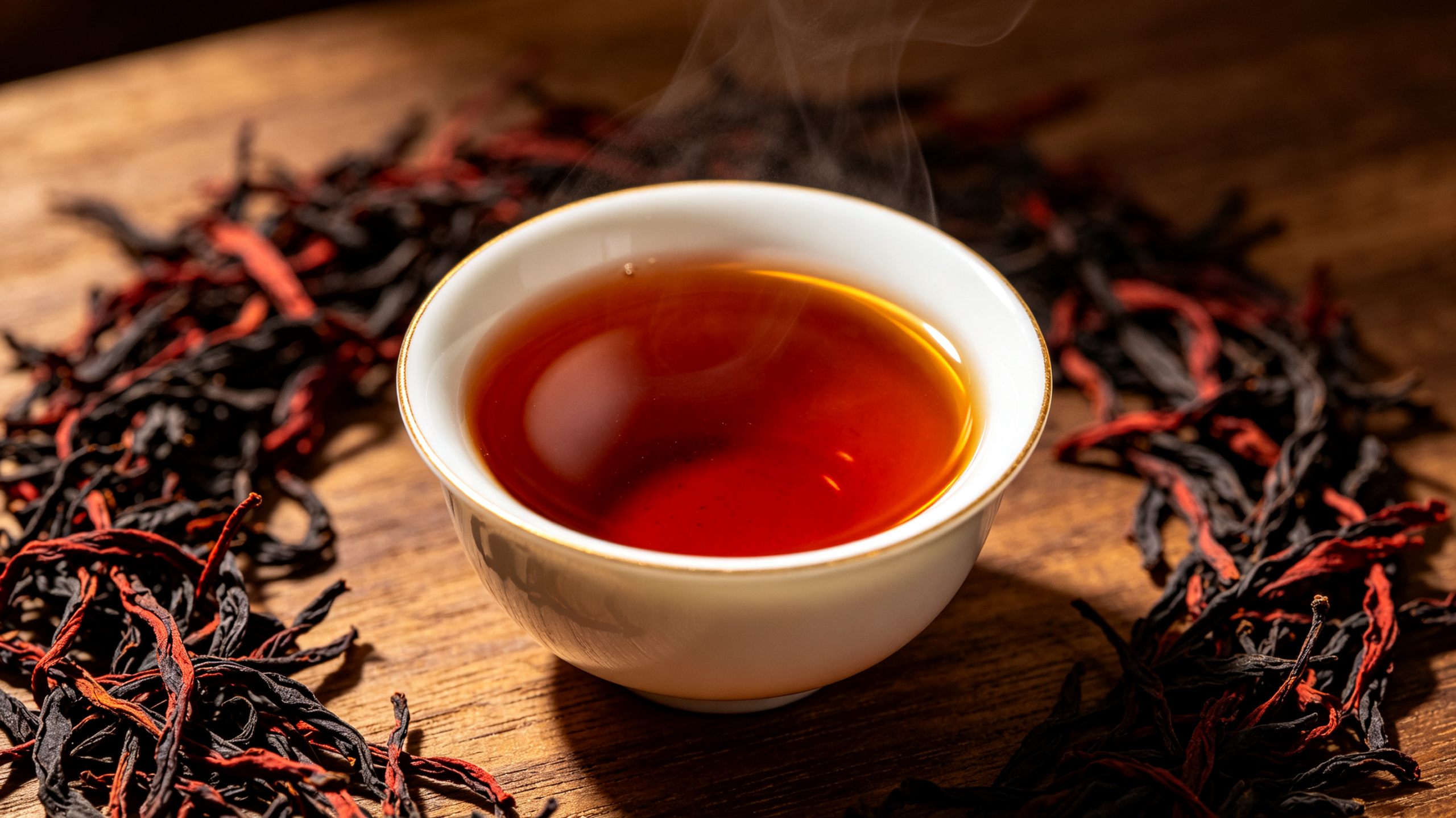
After pouring water, observing the liquor color is essential. A quality black tea should be bright, clear, and red; cloudy or dull liquor indicates inferior quality. After decanting, first smell the lid aroma, then slurp the tea. Slurping allows the liquor to roll across the tongue and palate, letting you feel its strength, body, sweetness, bitterness, and smoothness. Good black tea enters softly, without astringency or bitterness. The sweet, mellow sensation spreads from the tip of the tongue to the throat, with a long-lasting finish and a lingering fragrance in the cup.
Also pay attention to infusion endurance. Quality black tea can usually be brewed five to eight times, with subtle changes in aroma and flavor each round: the first infusion is high and lifted, the second full and rich, the third reaching its peak, then gradually fading, with the final infusions often revealing a clear sweetness. This layer-by-layer progression is exactly what makes tea tasting so captivating.
“This Lapsang Souchong has a clear longan-dried-fruit aroma and a hint of pine smoke in the dry leaf. The first infusion enters like silk, with the pine smoke swirling in the back of the nasal cavity; after the third infusion, woody sweetness and honeyed notes emerge, as if standing in the misty forests of Tongmu Pass, where the damp air is filled with the sweet scent of grass and trees.”
Tea · Marks of Growth
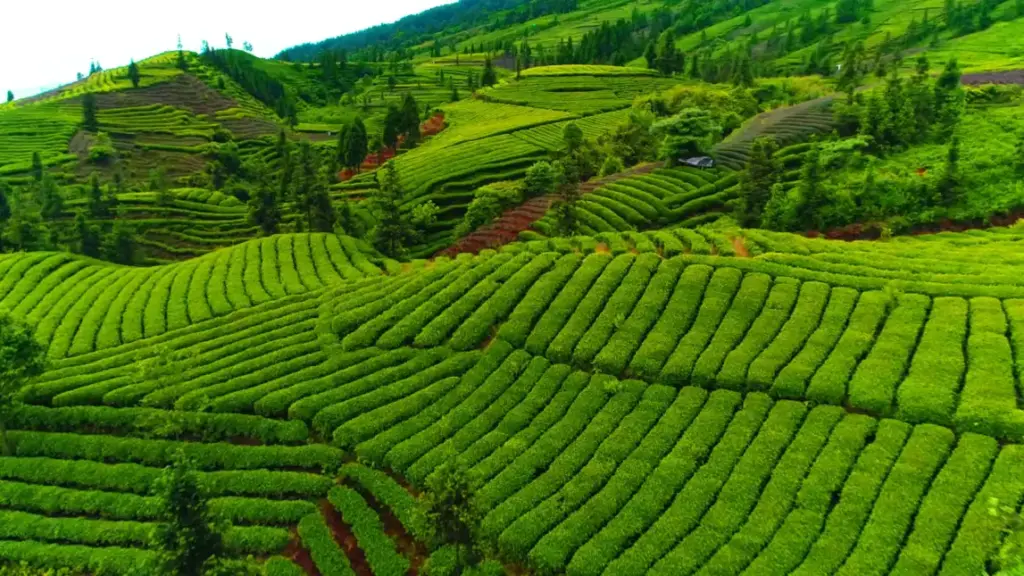
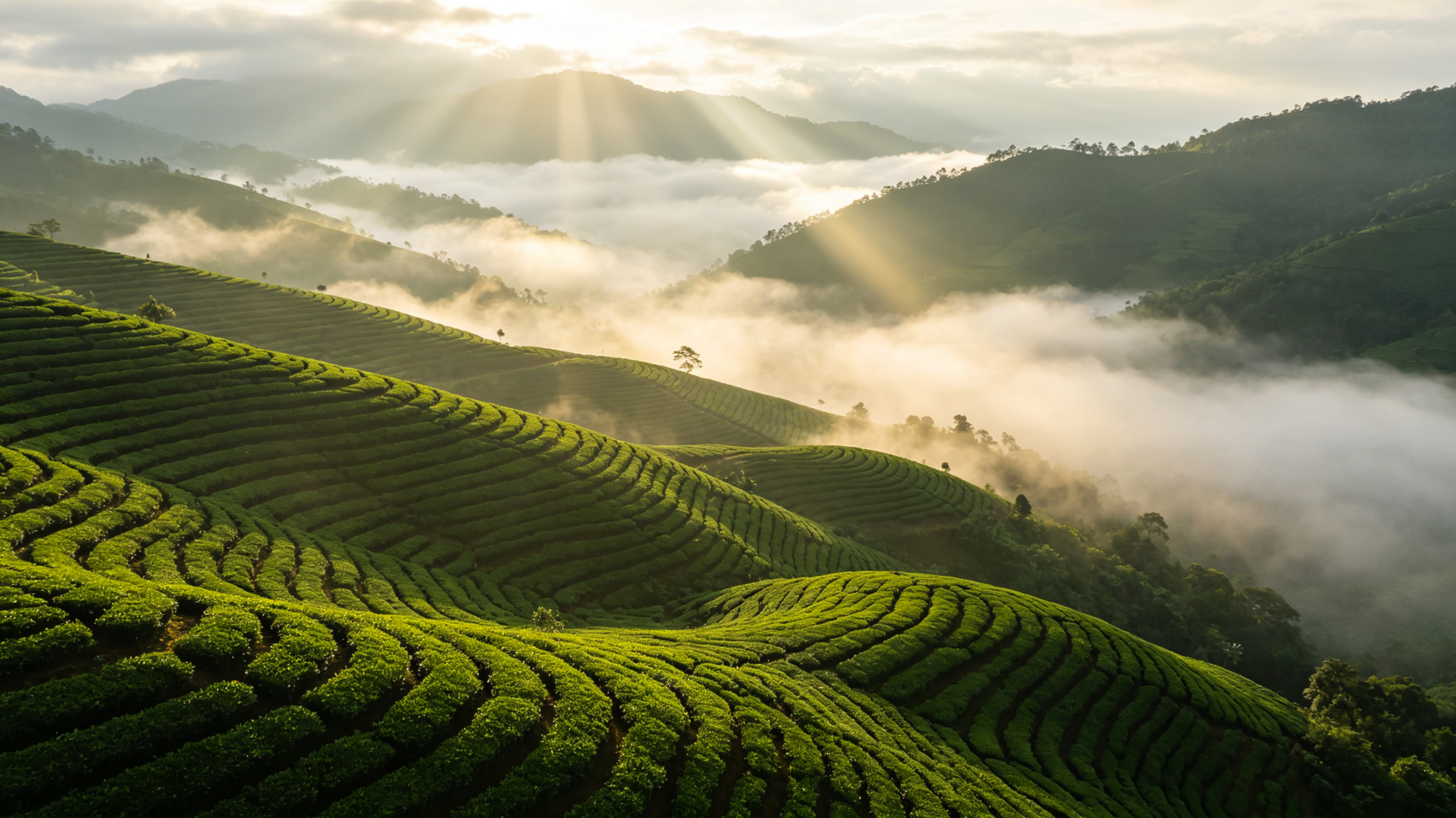
The tea plant, scientifically known as Camellia sinensis, is a perennial evergreen woody plant. It prefers warm, humid subtropical climates, thriving in areas with an average annual temperature of 15–25°C and annual rainfall of 1000–2000 mm. It favors acidic red and yellow soils with a pH of 4.5–6.0. Tea plants are shade-tolerant and enjoy diffused light. That is why high-mountain tea gardens are often shrouded in mist, with large day-night temperature differences that favor the accumulation of amino acids and aromatic compounds — the scientific basis for the saying, “High mountains and mist produce fine tea.”
-
1
Seedling Stage — Tea seeds germinate in moist soil and grow true leaves. At this stage, the root system is shallow, requiring shade, moisture retention, and protection from direct sunlight and drought.
-
2
Juvenile Stage — The plant begins to branch, and the canopy gradually forms as roots extend deeper. Formative pruning can be done now to develop a broad plucking surface, laying the foundation for future high yields.
-
3
Mature Stage — The canopy is lush, and new shoots grow vigorously. This is the main plucking stage. Each spring, tea farmers race against time to pick one bud and one leaf, or one bud and two leaves, to make various famous teas.
-
4
Senescent Stage — After years of plucking, the plant’s physiological functions decline, and yield and quality drop. Through heavy pruning or collar pruning, the tea plant is rejuvenated and regains its vitality.
From a single tea seed to a cup of tea liquor, years of time and countless processes stand in between. Every leaf carries sunlight, rain, soil, and human care. Understanding how tea grows may help us hold our cup with a little more respect and appreciation.
Love black tea and tea culture? Visit our online tea shop
Visit The Tea Pal Shop →