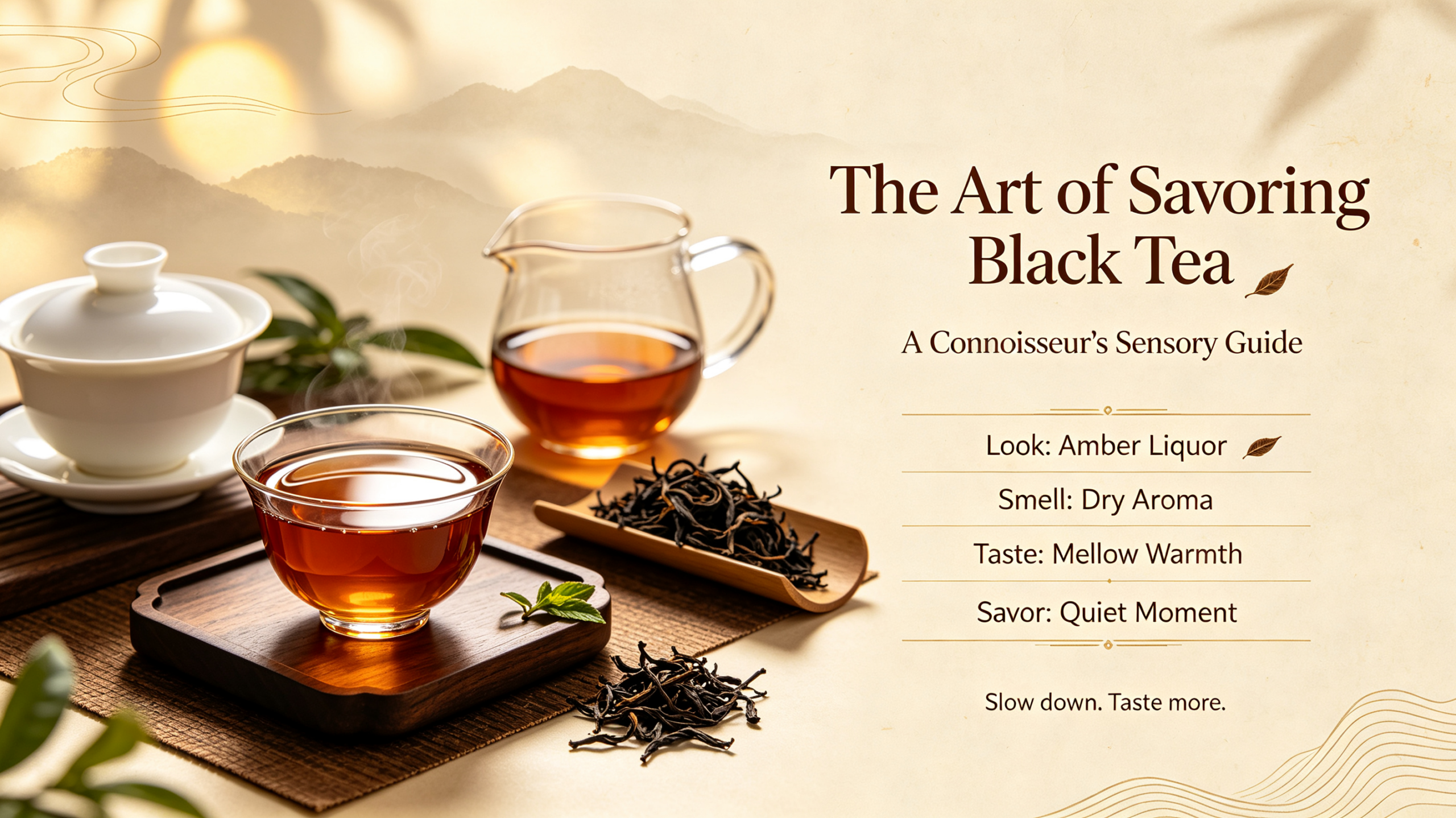
The Art of Savoring Black Tea: A Connoisseur’s Sensory Guide
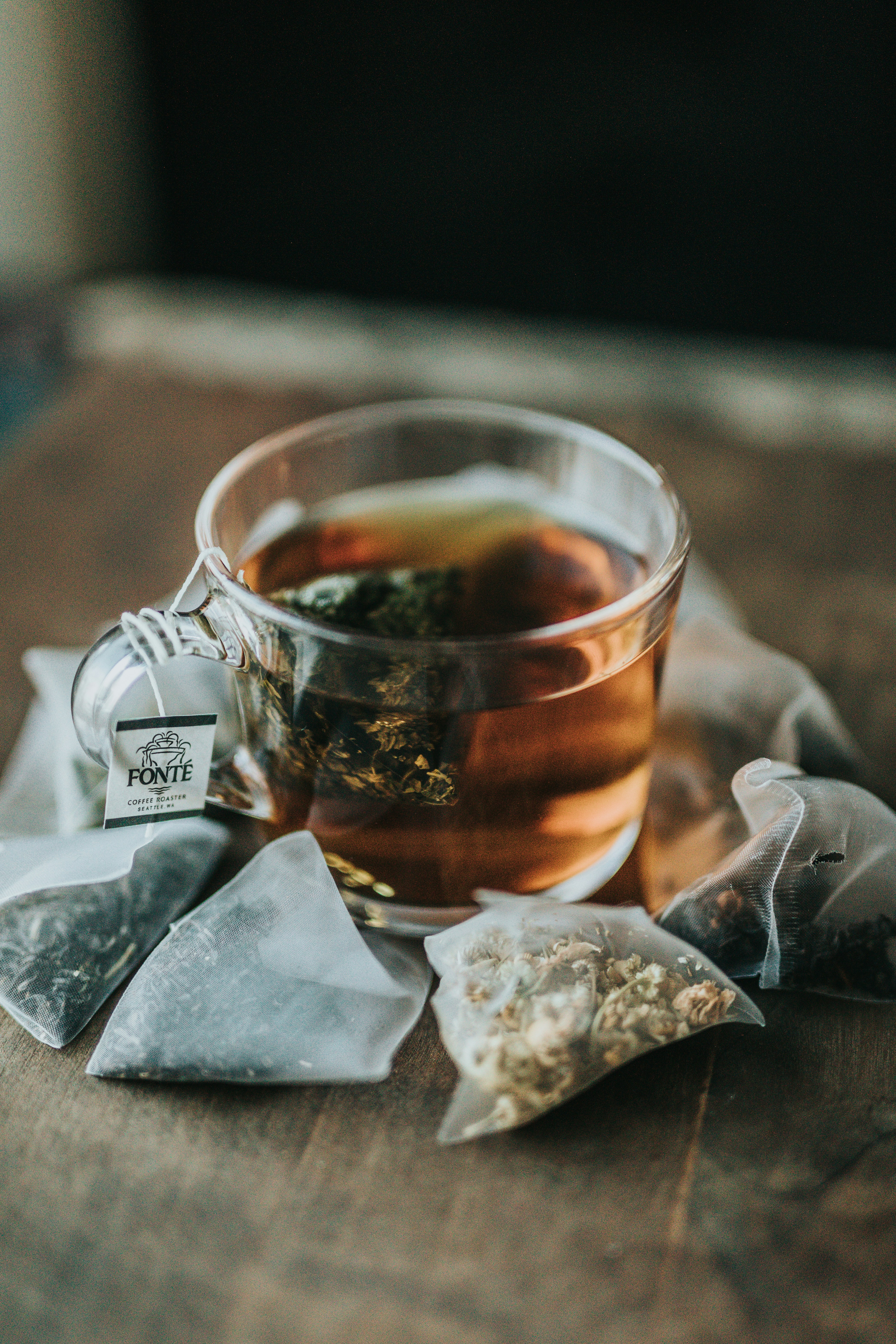
Black tea is cherished across continents and centuries, celebrated for its brilliant reddish-amber infusion, comforting warmth, and layered bouquet of dried fruit, malt, and wild honey. Yet, tasting fine black tea goes far beyond a casual morning bag steeped in boiling water. It is a mindful ritual that marries visual inspection, temperature discipline, and nuanced palate evaluation.
1. The Foundation: Vessels and Thermal Precision
Fine tea demands respectful extraction. Two essential variables dictate whether your leaves will sing or be silenced:
🍵 Choosing the Vessel
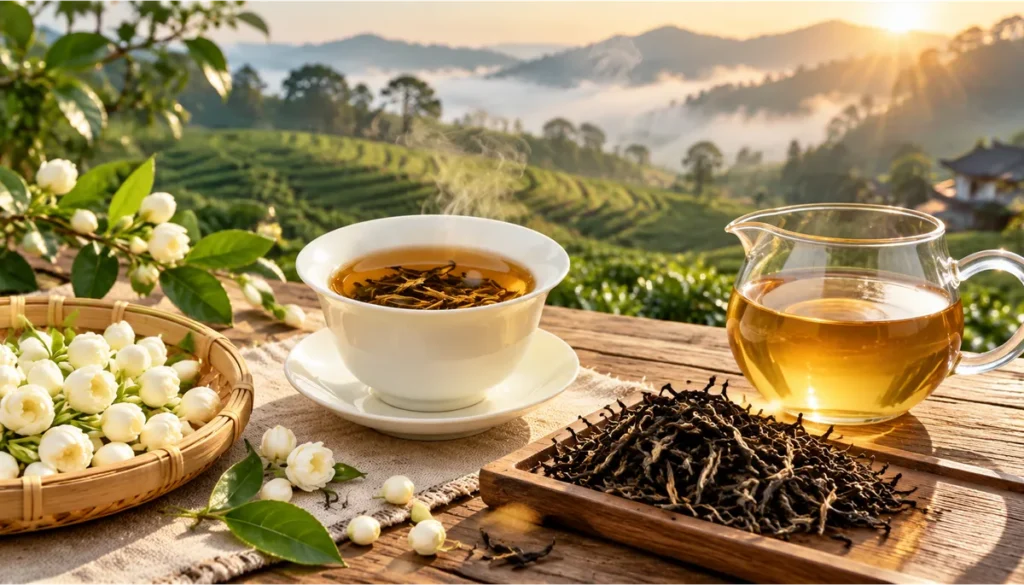
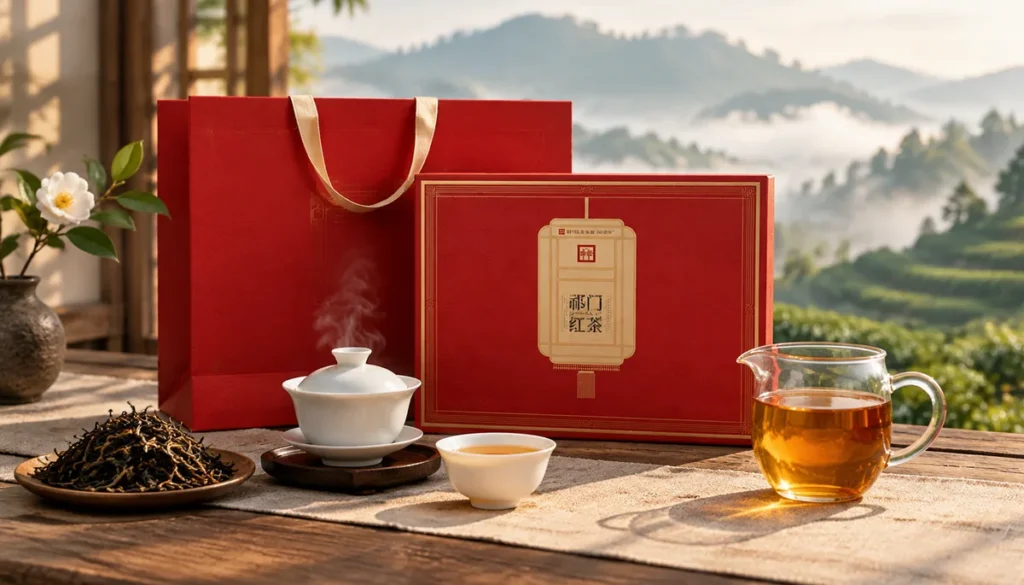
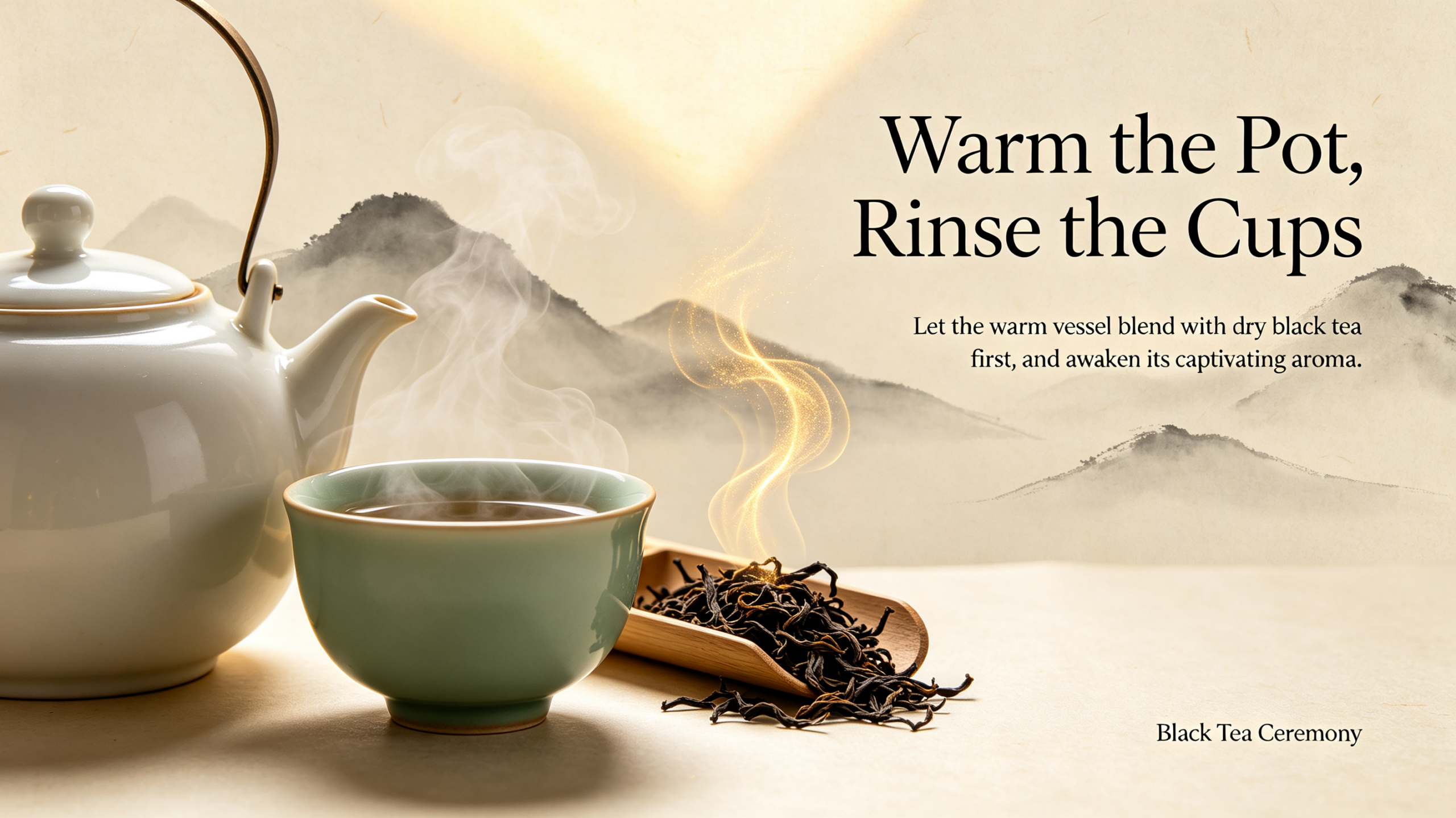
White Porcelain Gaiwan: The neutral, glazed surface of porcelain does not absorb delicate volatile oils, providing the most honest reflection of aroma and clarity. For darker, woodier infusions, seasoned purple clay (Yixing) pots can impart roundness.
💧 Water Temperature
Never Scald Delicate Leaves: While robust broad-leaf varieties relish boiling water (200°F–205°F / 93°C–96°C), tender spring bud-plucked teas like Jin Jun Mei shine brightest between 190°F–195°F (88°C–90°C) to prevent harsh astringency.
2. Awaken the Senses: The 5-Step Tasting Methodology
Professional tea masters evaluate tea using a structured sensory sequence. You can easily reproduce this mindful discipline at home:
-
Inspect the Dry Leaves (Sight & Touch)
Analyze the Pluck: Are the leaves tightly twisted, uniform, and wiry, or broken and dusty? Premium black teas showcase intact leaf integrity and are often adorned with shimmering golden buds (pekoe).
Examine the Hue: Superior craftsmanship exhibits a lustrous, oiled sheen of dark copper or jet-black with vibrant amber accents, never a dull, chalky gray. -
Observe the Liquor & The “Golden Halo” (Visual Beauty)
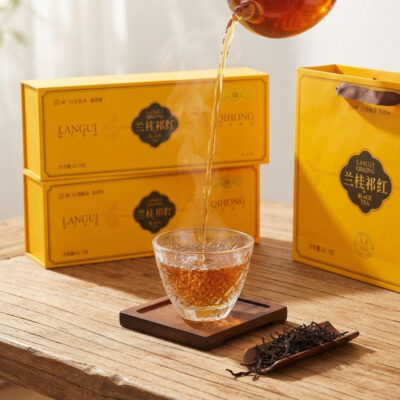
Hold your tasting cup up to natural light. A pristine black tea liquor should be crystal-clear, glowing like polished topaz or deep carnelian.
Look for the Golden Ring: High-grade black teas frequently exhibit a distinct, luminous golden halo along the rim of the teacup. This shimmer indicates high concentrations of theaflavins—the hallmark of fresh, expertly oxidized tea leaves. -
Explore Aroma in Three Stages (Olfactory Journey)
Fragrance evolves dynamically as the cup cools. Always smell in three discrete phases:
• Hot Aroma: Sniff the damp underside of the lid immediately after steeping to confirm freshness, purity, and the absence of mold or taint.
• Warm Aroma: Inhale as the steam softens to identify central tasting notes: wildflower honey, candied stone fruits, baked sweet potato, or warm malt.
• Cold Cup Scent: Once the cup is empty, smell the residual warmth clinging to the porcelain. The persistence of this lingering fragrance reflects the oil content and quality of the terroir. -
The Art of Aerated Slurping (Taste & Texture)
Aerate Your Sip: Draw a small amount of liquor into your mouth accompanied by a gentle intake of air. This atomizes the tea into a fine mist across your entire palate, engaging the taste receptors on the front, sides, and base of the tongue simultaneously.
Assess the Viscosity: Does the tea feel thin and watery, or rich, velvety, and broth-like? High-mountain teas offer a heavy, coating mouthfeel.
Note the Sweetness & Throat Resonance (Hui Gan): A prime black tea should finish smooth, without biting bitterness, yielding a gradual cooling sensation and sweet lingering resonance in the throat. -
Examine the Spent Leaves (The Final Verdict)
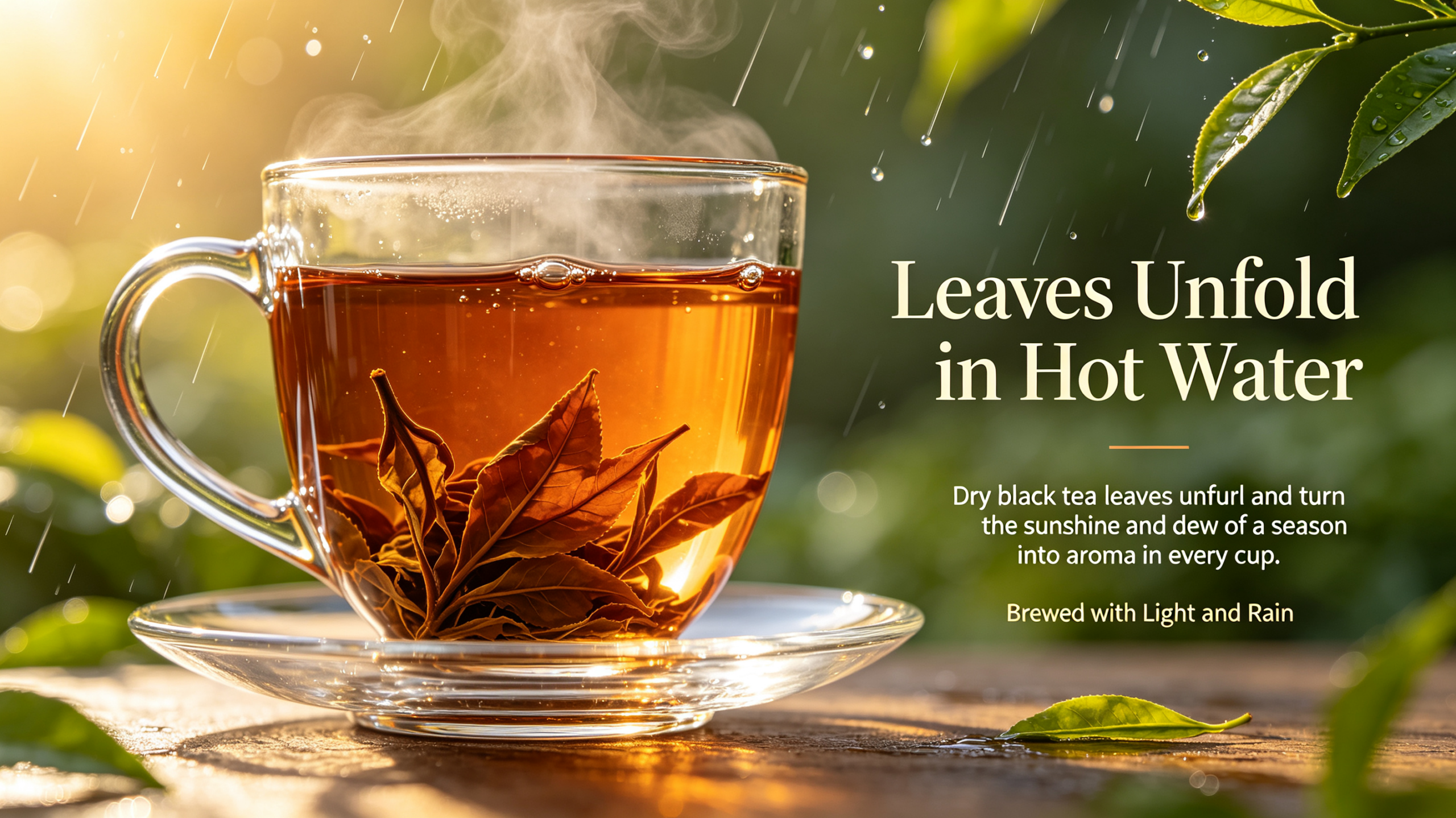
Spread the steeped leaves upon a white saucer. They should appear elastic, supple, and bright bronze or copper-red. Brittle, dark-spotted, or mushy fragments denote uneven fermentation or scorched processing.
3. The Flavor Spectrum: Iconic Black Teas to Know
Each growing region and processing tradition imprints a signature DNA upon the leaf:
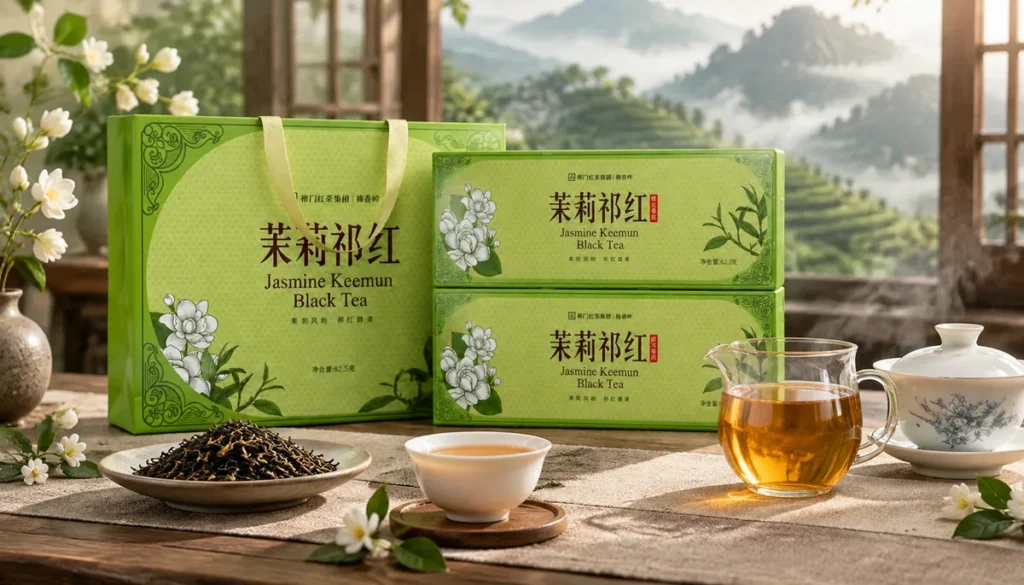
• Keemun (Qi Men): The quintessential Chinese black tea hailing from Anhui. Known worldwide for the distinctive “Keemun Aroma”—an intoxicating harmony of wild orchid, roasted apple, and wine-like sweetness.
• Lapsang Souchong (Zheng Shan Xiao Zhong): The world’s original black tea from the Wuyi Mountains. Traditional styles are gently smoked over native pine needles, imparting savory resinous notes with a sweet dried longan finish; modern unsmoked variants (such as Jin Jun Mei) feature honeyed nectar and floral delicacy.
• Yunnan Dianhong: Sourced from ancient large-leaf arbor trees. Marked by dense golden tips, an opulent copper-orange liquor, and bold notes of roasted malt, carob, and caramel.
• Darjeeling & High-Grown Ceylon: Darjeeling (especially second flush) is world-renowned for its crisp, vintage “muscatel” grape fragrance. High-altitude Ceylon produces a brisk, bright, and citrusy infusion that enlivens the senses.
4. Connoisseur FAQs: Demystifying Black Tea
A: Quite the contrary! This natural phenomenon is called “Cream Down” (冷后浑). As the liquor cools, beneficial theaflavins and thearubigins bind with natural caffeine molecules, forming microscopic colloidal suspensions. It is an unmistakable indicator of rich polyphenol density and superior grade; heating the liquid gently returns it to clear amber.
A: While aged puerh and tightly compressed oolongs require waking up, pristine whole-leaf black teas do not. The first extraction yields the highest concentration of volatile amino acids and aromatic esters. A flash rinse (1–2 seconds) is acceptable if you prefer, but discarding an extended first steep means losing the finest essence of the harvest.
Begin Your Journey to Exceptional Tea
Tasting real tea is an invitation to slow down and rediscover purity in every cup.
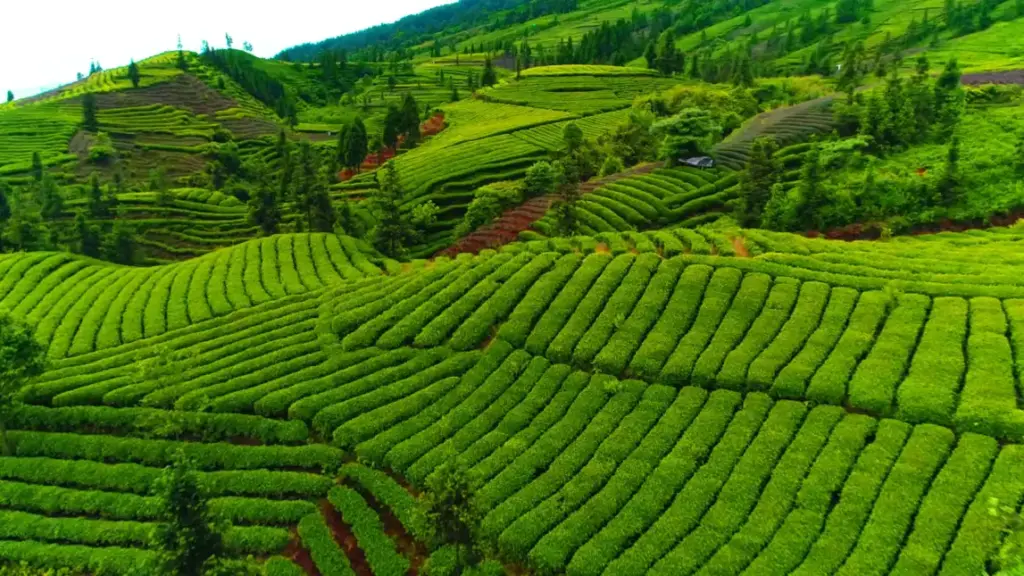
At The Tea Pal, we partner directly with heritage tea gardens to bring you single-origin, pristine harvests crafted with time-honored dedication.