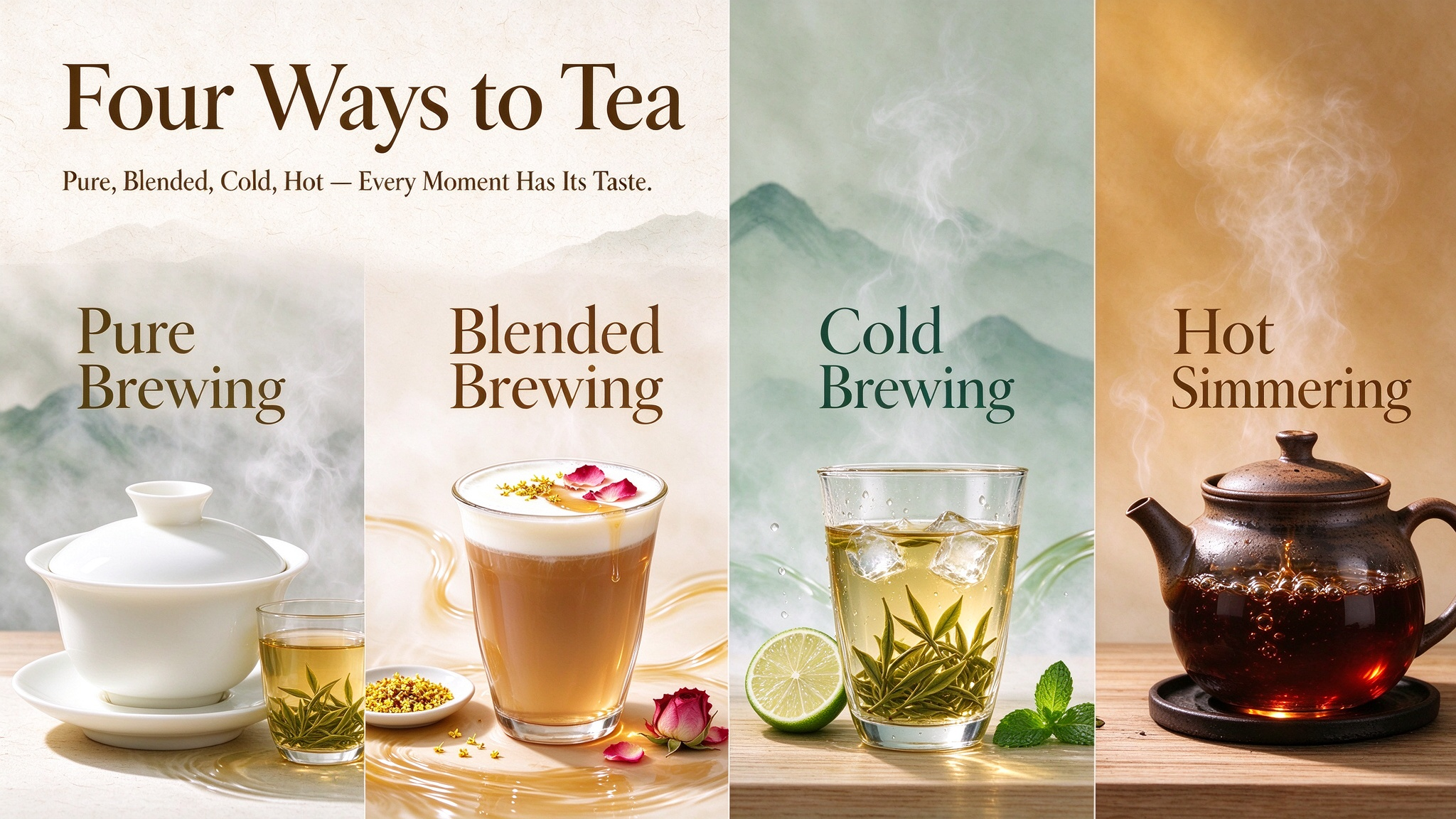
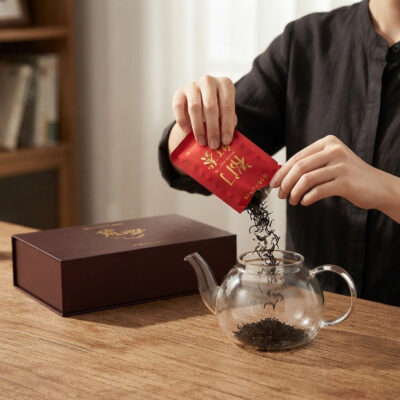
Four Ways to Drink Tea
Tea holds a thousand flavors, and the way we drink it shifts with the seasons. The same leaf can be pure and quiet, rich and blended, cold and clear, or deep and boiled. Water temperature, vessel, and state of mind can transform one leaf into entirely different cups.
In this issue, we set aside terroir and processing. We focus only on how to drink — from a clean cup of black tea to aged white tea simmering on a winter stove. Find the cup that belongs to you.

Pure Drinking, Tasting the True Self
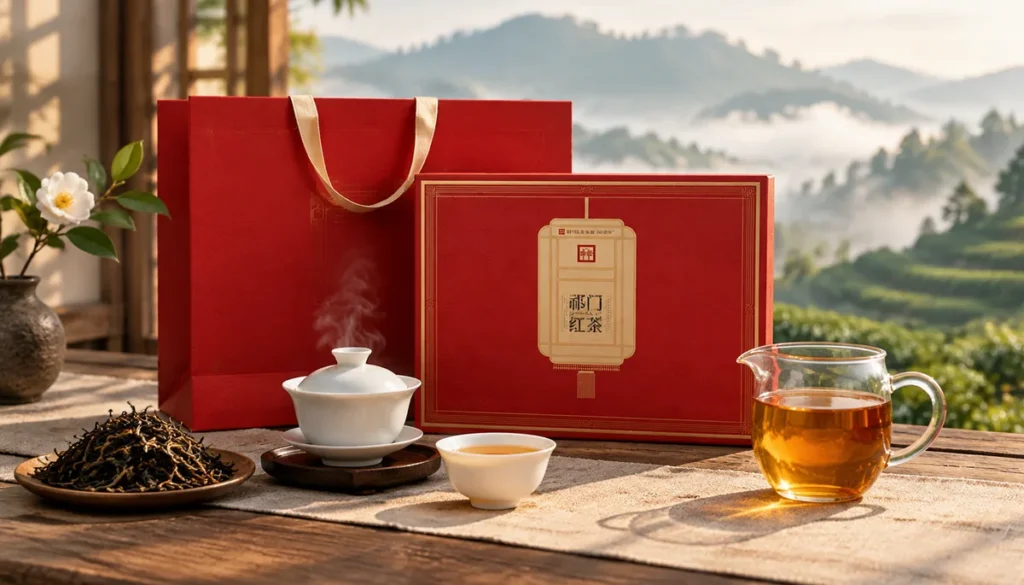
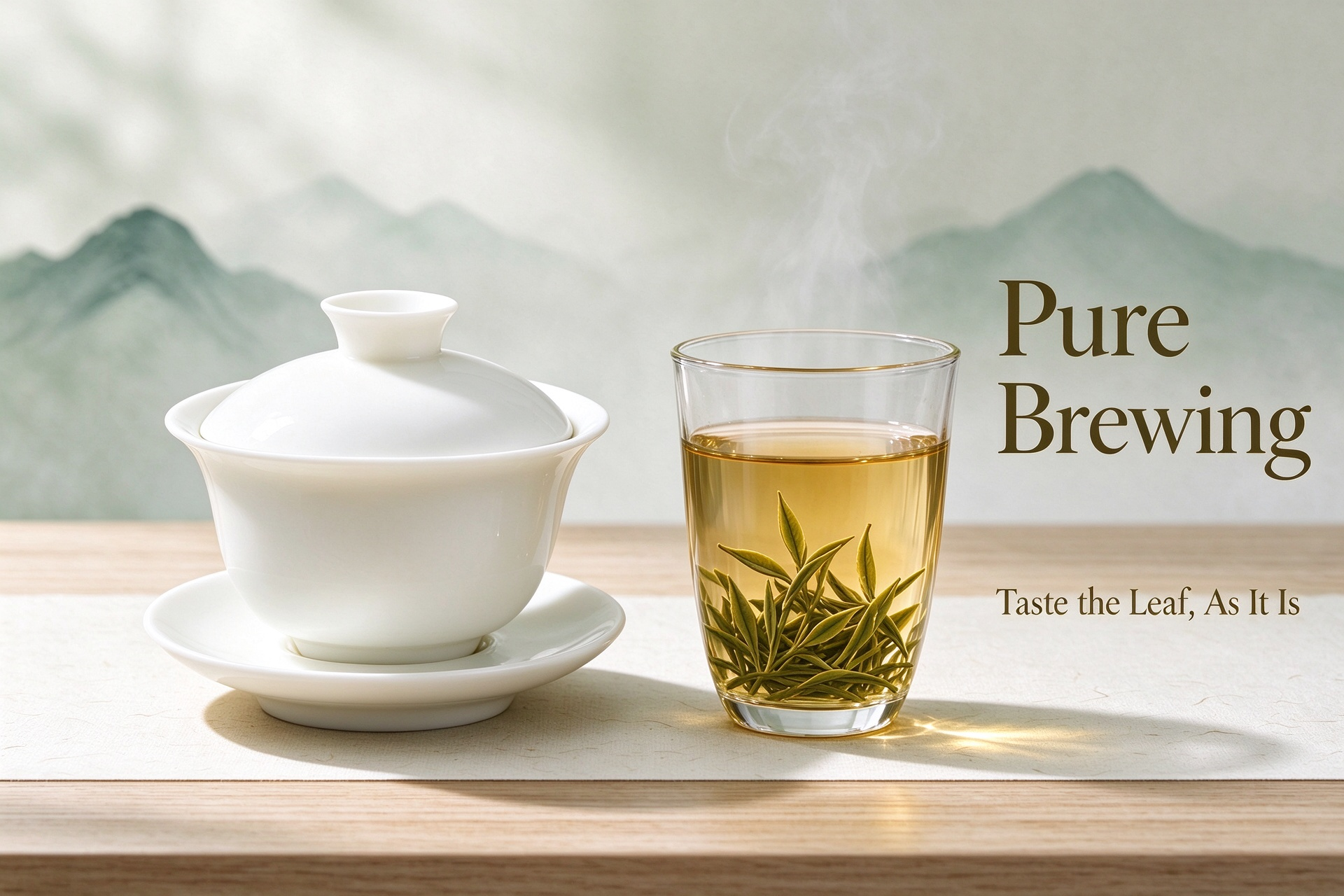
Pure drinking is the oldest way — no additions, just hot water and leaves, letting the tea’s natural aroma and flavor speak completely. For a quality black tea, pure drinking is the best way to judge its character.
Use 3–5 grams of dry leaf in a warmed gaiwan or porcelain pot. Water temperature should be 90–95°C. The first infusion should be quick, about 10 seconds; add 5–10 seconds for each subsequent infusion. A good black tea opens high and bright, fills out on the second infusion, and peaks by the third, with a clean sweetness in the final cups.
White porcelain or glass is ideal for pure drinking, so you can watch the liquor. A bright red cup with a golden ring at the edge is the mark of a fine black tea. No snacks, no conversation — just attention to the cup in front of you. That is the quiet ritual of pure drinking.
Blended, Adding Richness
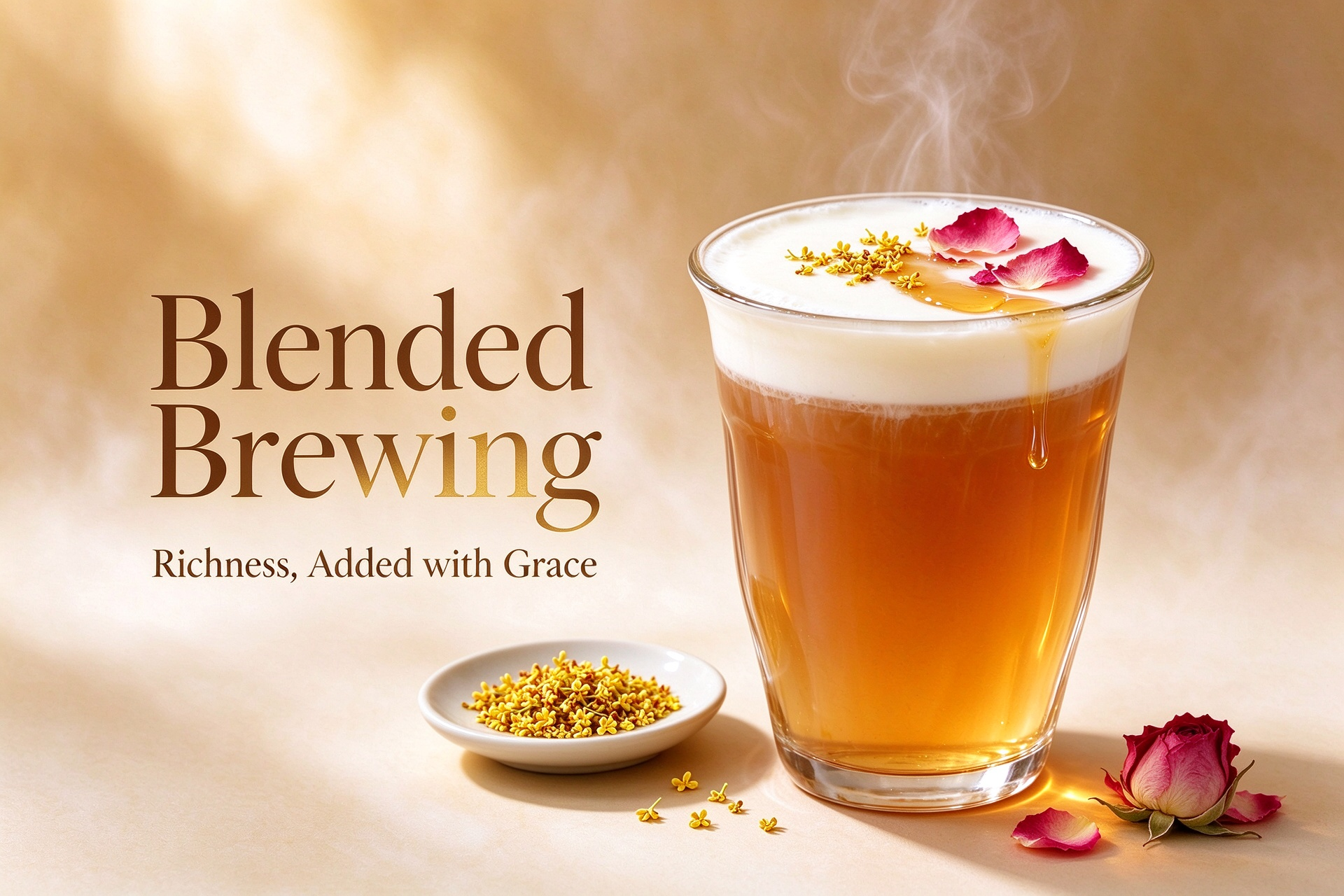
Blending is black tea’s most popular form around the world. Milk, honey, lemon, cinnamon, ginger — different additions collide with black tea to create layered taste experiences. English afternoon tea, Indian masala chai, and Hong Kong milk tea are all classics of blending.
For blending, choose black teas with bold, strong body — Dianhong, Assam, or Ceylon — so the tea flavor remains clear after milk is added. Water can be slightly hotter, 95–100°C, with a longer steep to make the liquor stronger.
Classic combinations: black tea with milk and a little sugar for milk tea; black tea with lemon and honey for a refreshing lift; black tea with ginger and cinnamon to warm the body in winter. There is no standard answer in blending — it is entirely personal. That is exactly the pleasure of it.
My favorite winter recipe: Dianhong with a piece of dried tangerine peel and a small cinnamon stick, brought to a boil then simmered for three minutes, poured into a mug to warm both hands and stomach.
Cold Brew, Taking the Clear & Cool
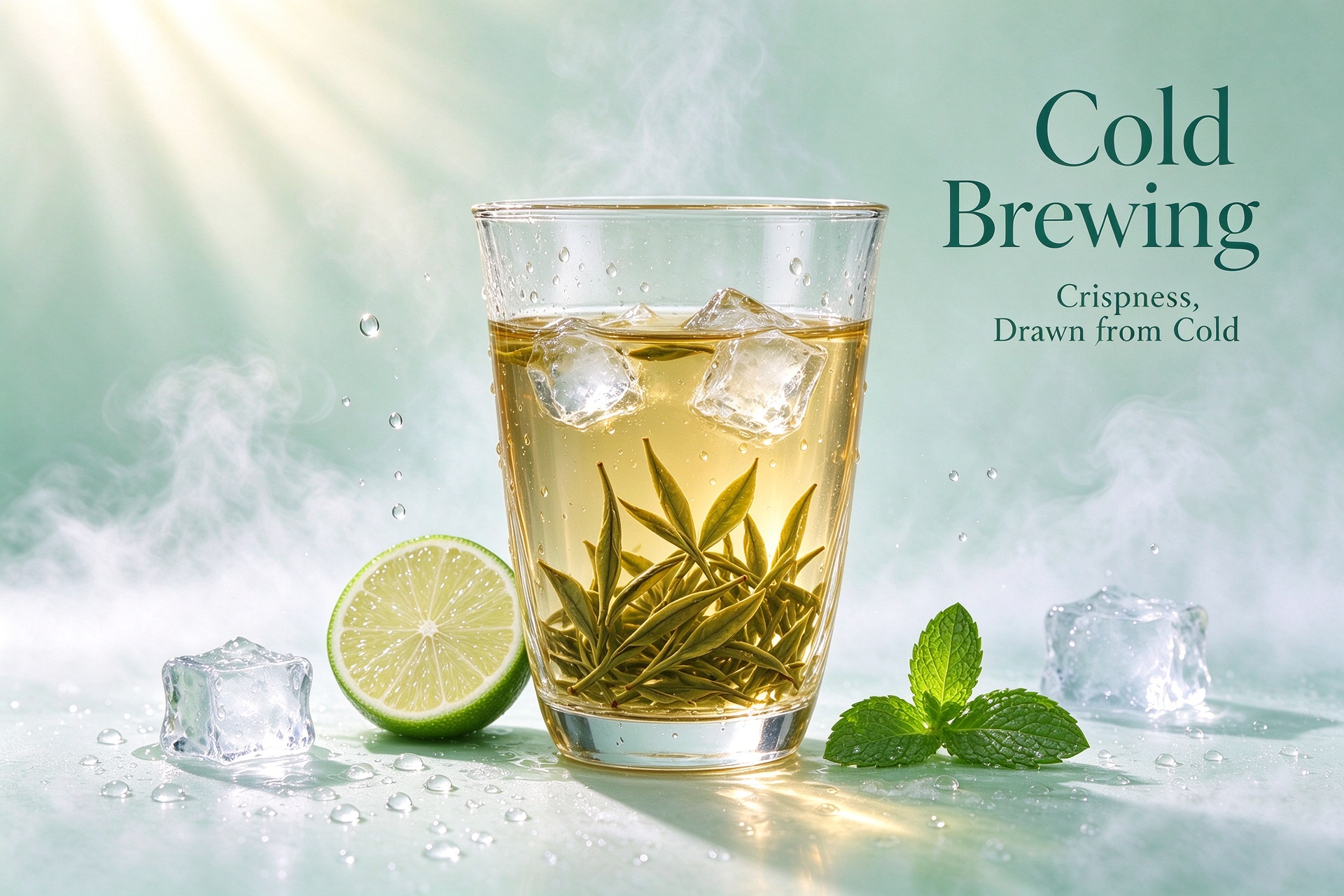
Cold brewing has become popular in recent years. Steeping tea in cold or ice water for a long time extracts a liquor with low bitterness, softer sweetness, and gentler aroma — especially suited to summer.
Cold brewing suits lightly oxidized or high-aroma teas: white tea, oolong, green tea, and some black teas. Use more leaf than for hot brewing, about 5–8 grams per 500 ml, refrigerate for 4–8 hours, then strain and drink.
Cold-brewed tea is clear and sweet, almost without bitterness. Add fruit slices or mint for a summer special. Brew several bottles at once and keep them in the fridge — ideal for the office or the outdoors.
Boiled, Gaining the Depth
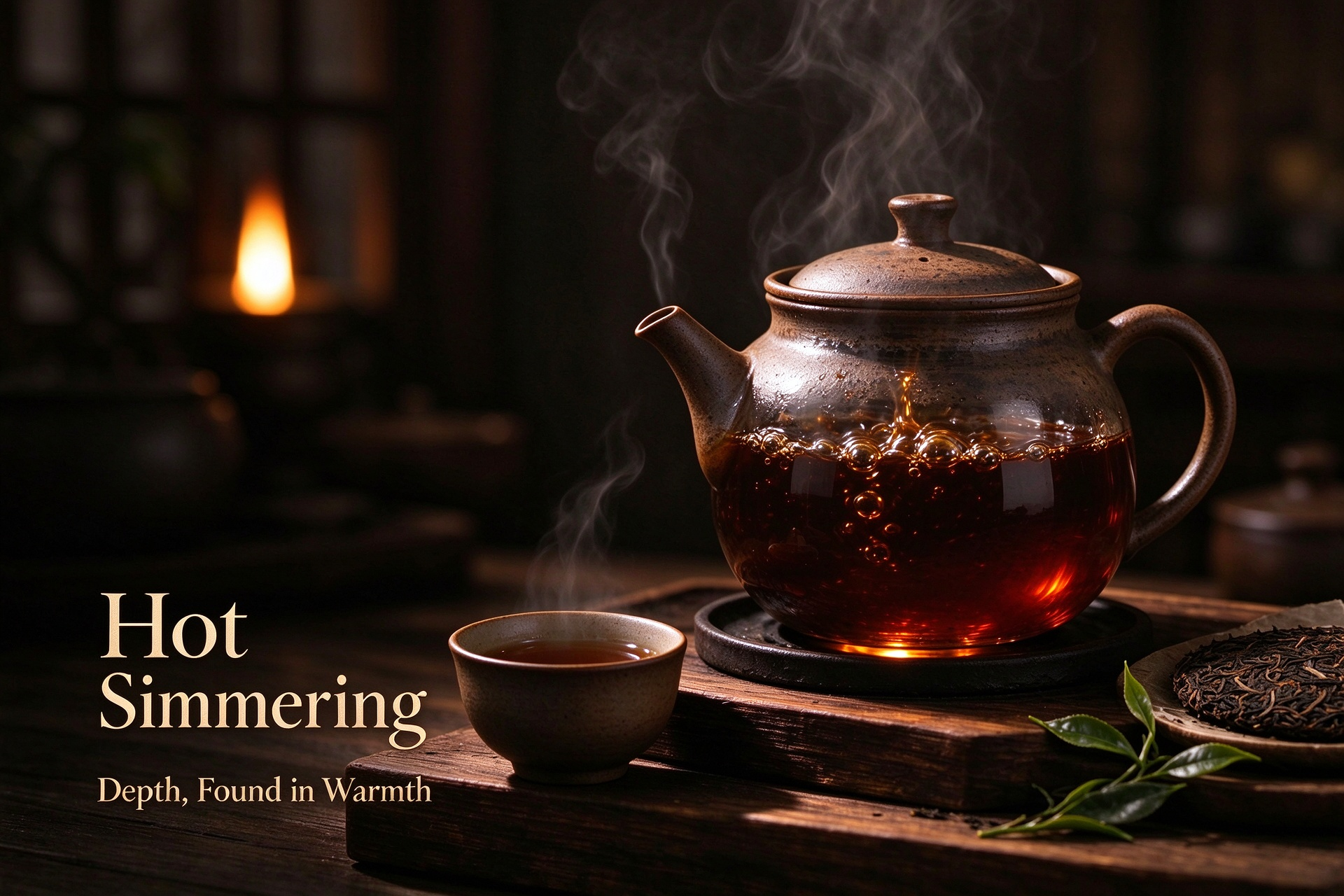
Boiling is the warmest way to drink tea in winter. Leaves are placed in a pot with water and simmered slowly. High heat and long extraction produce a thick, smooth liquor — especially suited to aged white tea, ripe pu’er, and aged oolong.
Use a clay or glass pot, about 5–8 grams per 800 ml of water. Bring to a boil over high heat, then lower to a simmer for 3–5 minutes. Decant and add more water to boil again. Aged white tea develops a rich date aroma; ripe pu’er becomes smooth and sweet.
Gathering around a stove to boil tea has become one of the most beloved winter social rituals. Fire, tea aroma, a few friends — what is boiling is not only tea, but time slowed down.
Good Tea Begins with Growing
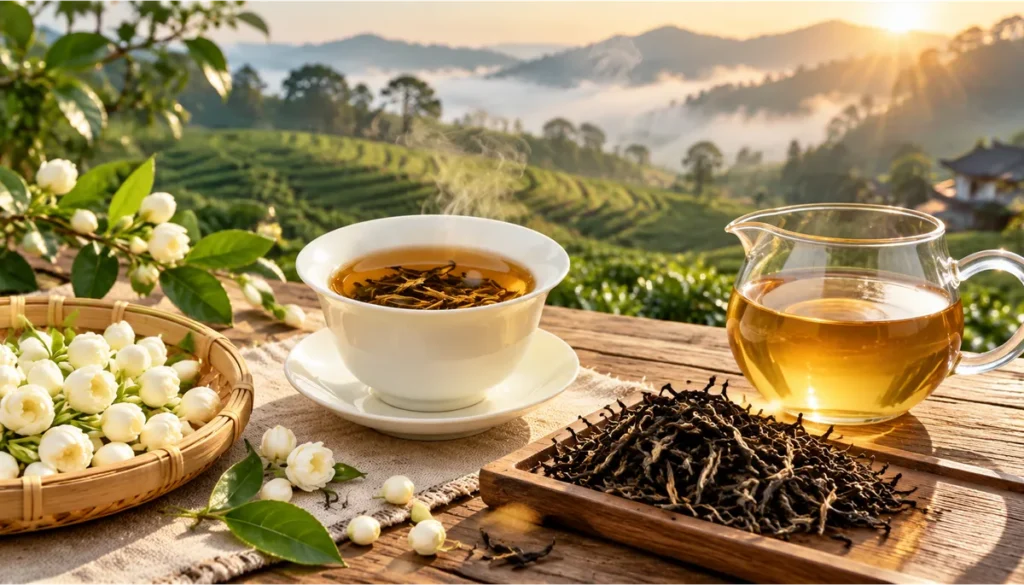
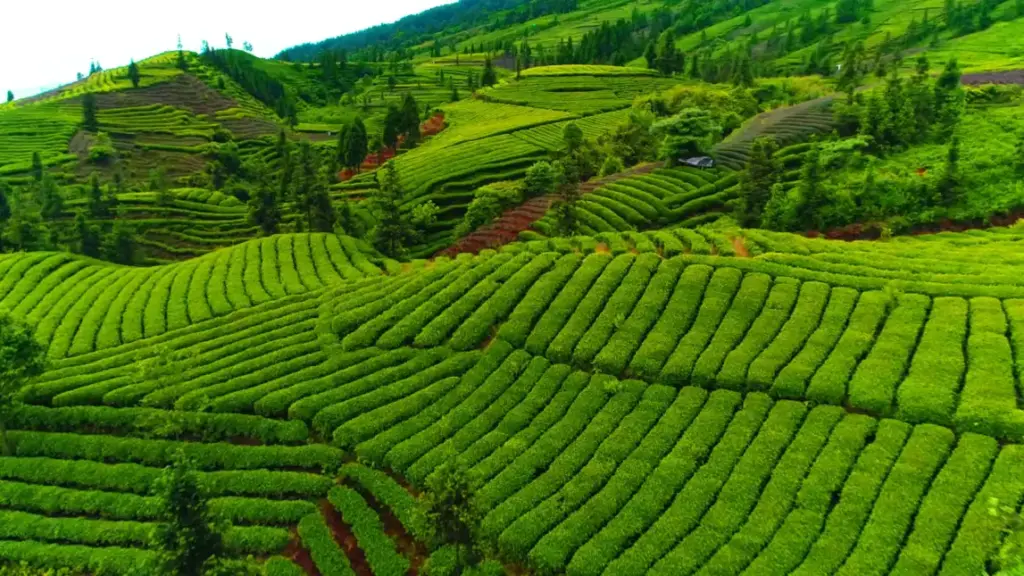
The tea plant prefers warm, humid subtropical climates, thriving at 15–25°C with 1000–2000 mm of annual rainfall. It favors acidic red and yellow soils. Tea plants are shade-tolerant and enjoy diffused light, which is why high-mountain tea gardens are often shrouded in mist. Large day-night temperature differences favor the accumulation of amino acids and aromatic compounds — the scientific basis for “high mountains and mist produce fine tea.” From a single tea seed to a cup of tea liquor, years of time and countless processes stand in between. Understanding how tea grows may help us hold our cup with a little more respect.